
A Reconciliation journey: The history of First Nations park rangers in South Australia
The Department for Environment and Water (DEW) works together with Traditional Owners to manage Country across the state, in a number ways, including:
Co-management of parks and reserves
Co-management is a formal arrangement between DEW and First Nations organisations. It combines traditional knowledge of Country with contemporary science and methods, for the benefit of all park users. You can find out more about co-management here: Understanding co-management of South Australia’s National Parks.
First Nations park rangers
A historic program in the 1980s led to reconciliation progress that’s still at work today.
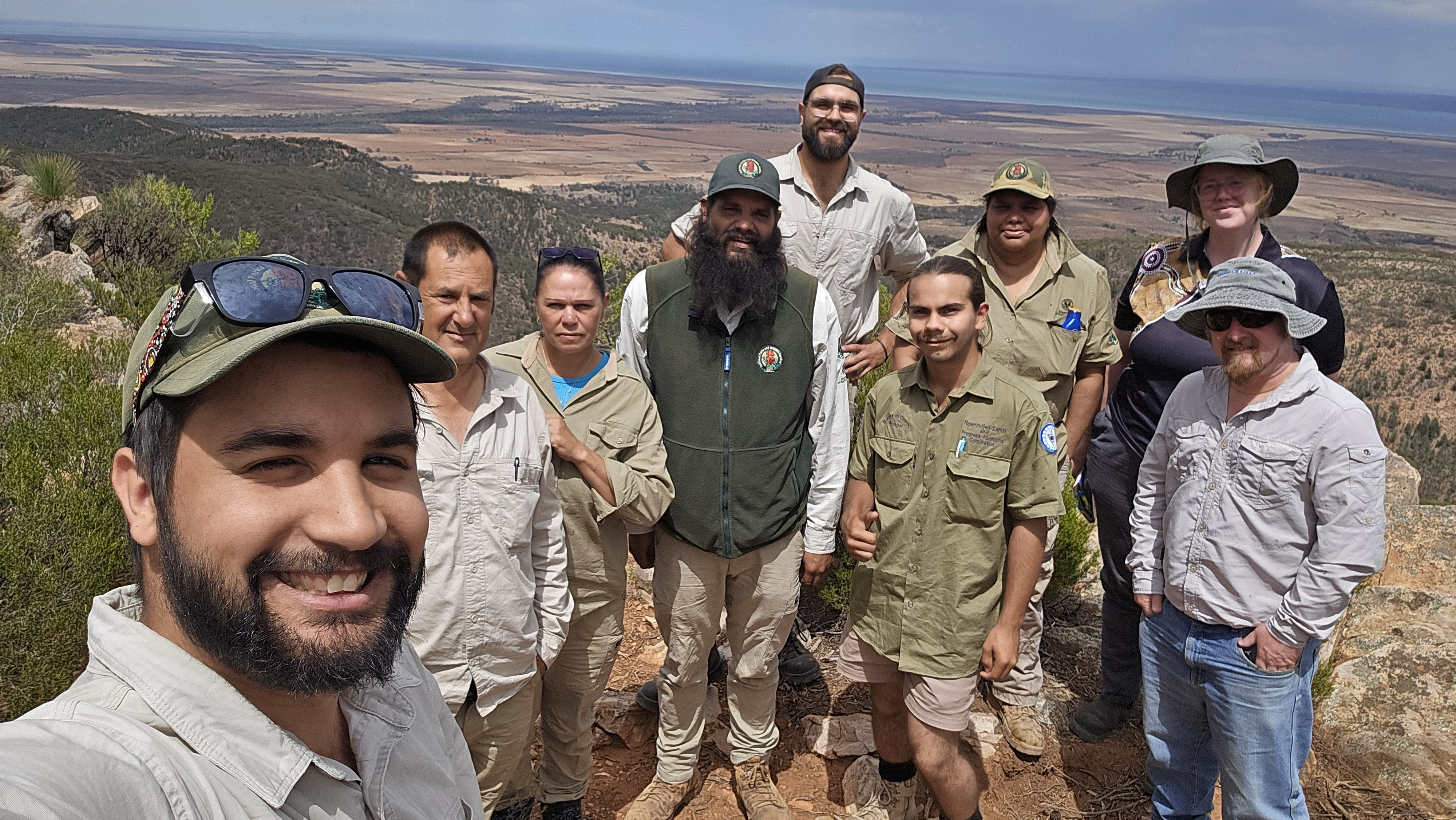
Australia’s first Aboriginal Ranger training program happened in South Australia, more than 40 years ago.
The program ran in the Vulkathunha-Gammon Ranges National Park, on the traditional lands of the Adnyamathanha people, back in 1983.
Peter Taylor, who worked for the federal agency Australian National Parks and Wildlife Service (ANPWS), was the creator of that first program. He explained how it came about.
“Vulkathunha-Gammon Ranges had just had a large amount of land added to the national park at the time,” said Peter, “and there was a fair bit of resistance from the Adnyamathanha people, because there had been limited engagement with them.”
Did you know? 13.8 million hectares of land is co-managed in South Australia.
Thanks to the Adnyamathanha people’s advocacy for their cultural heritage, the ANPWS funded an Australian-first program to train Aboriginal people as park rangers.
Peter was already working in the region at the time and engaging with the Adnyamathanha people, and took on the challenge of creating the 12-month program.
“The four trainees and I were novices together regarding South Australian park management practice, so we trooped all over the place and engaged parks staff in teaching the guys ranger skills – everything from feral animal control to search and rescue, to wildlife management and botany and archaeology and more,” said Peter.
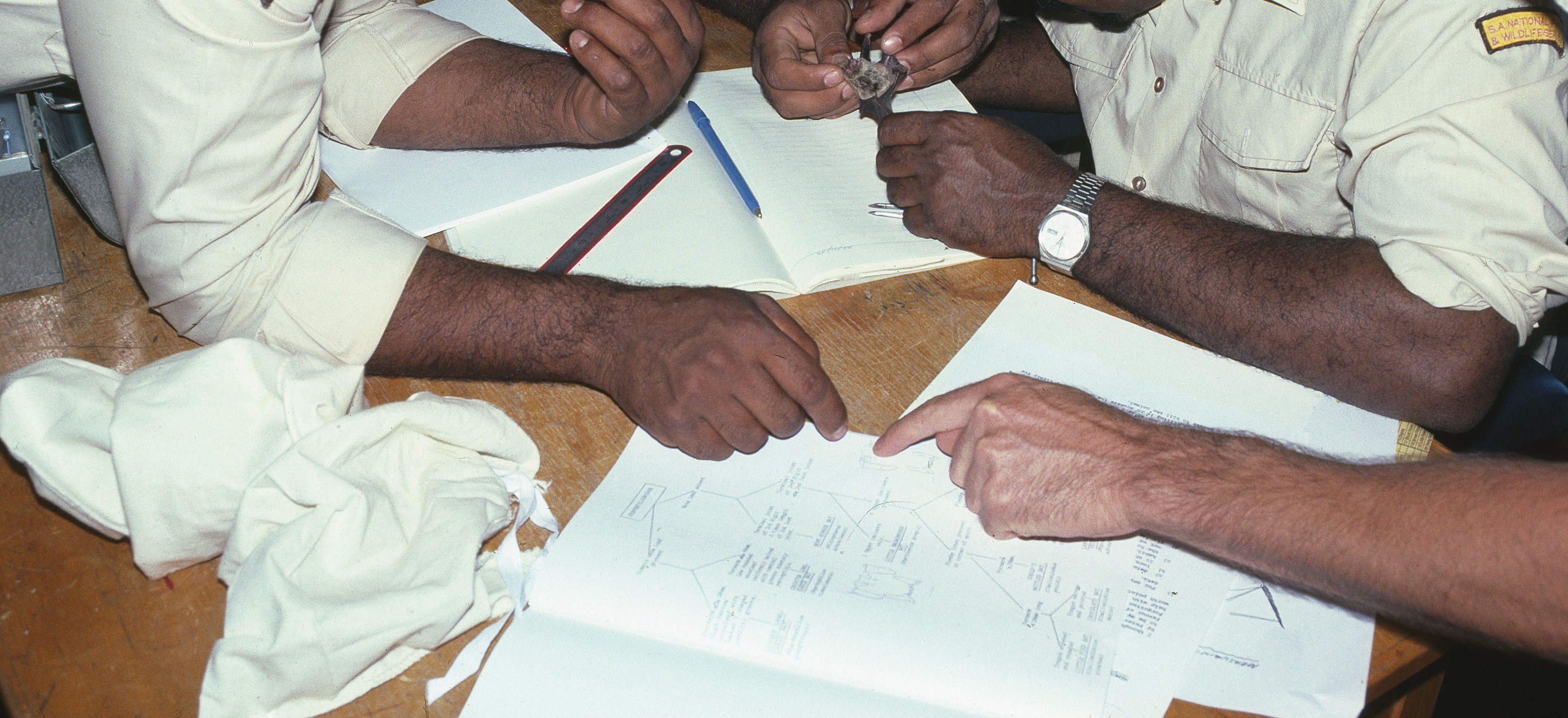
According to the attitudes of the time, the intention was really a one-way process of education about western land management techniques. But the program sparked interest in Traditional Owner knowledge and culture in parks, driving early steps in DEW’s Reconciliation journey in land management.
“We were teaching young fellows to be rangers,” said Peter. “But it was pretty evident as we got going that actually there was a lot of cultural knowledge about the country that had never been documented. And during the program we set things up so the rangers could represent their elders in educating tourists and other park staff about the significance of the land from an Aboriginal perspective.”
Understanding and action grew
The ranger training program in 1983 laid the foundations of new ways for Aboriginal and non-Aboriginal people to work together towards a shared goal of caring for the land. Subsequent actions included:
- Helping restore the Adnyamathanha language, with anthropologists and linguists from Australian National University.
- A second Aboriginal ranger training program began with the Ngarrindjeri people in the Coorong National Park in 1985.
- The evolution of the National Indigenous Protected Area (IPA) Program, with Nantawarrina IPA adjacent to Vulkathunha-Gammon Ranges National Park the first to be created in 1998 – another Australian first happening in SA.
- Progressive work and understanding led to the formal establishment of First Nations co-management with DEW in 2004.
Now: the First Nations Ranger Development Program
In 2022 the South Australian Government committed $4.8 million over 4 years to employ 15 new Aboriginal rangers across our parks. When this goal was achieved, the remaining funding was directed to a program to encourage retention and career growth.
The Aboriginal Ranger Development Program (ARDP), co-developed with TAFE, helps upskill our Aboriginal rangers with their Certificate III in Conservation and Ecosystem Management.
It’s delivered in the form of intensive, hands-on education sessions in different regions and parks around the state each month.
Rangers gain new skills and knowledge in different environments, and each takes a turn to ‘host’ at their own park and pass on local and traditional expertise.
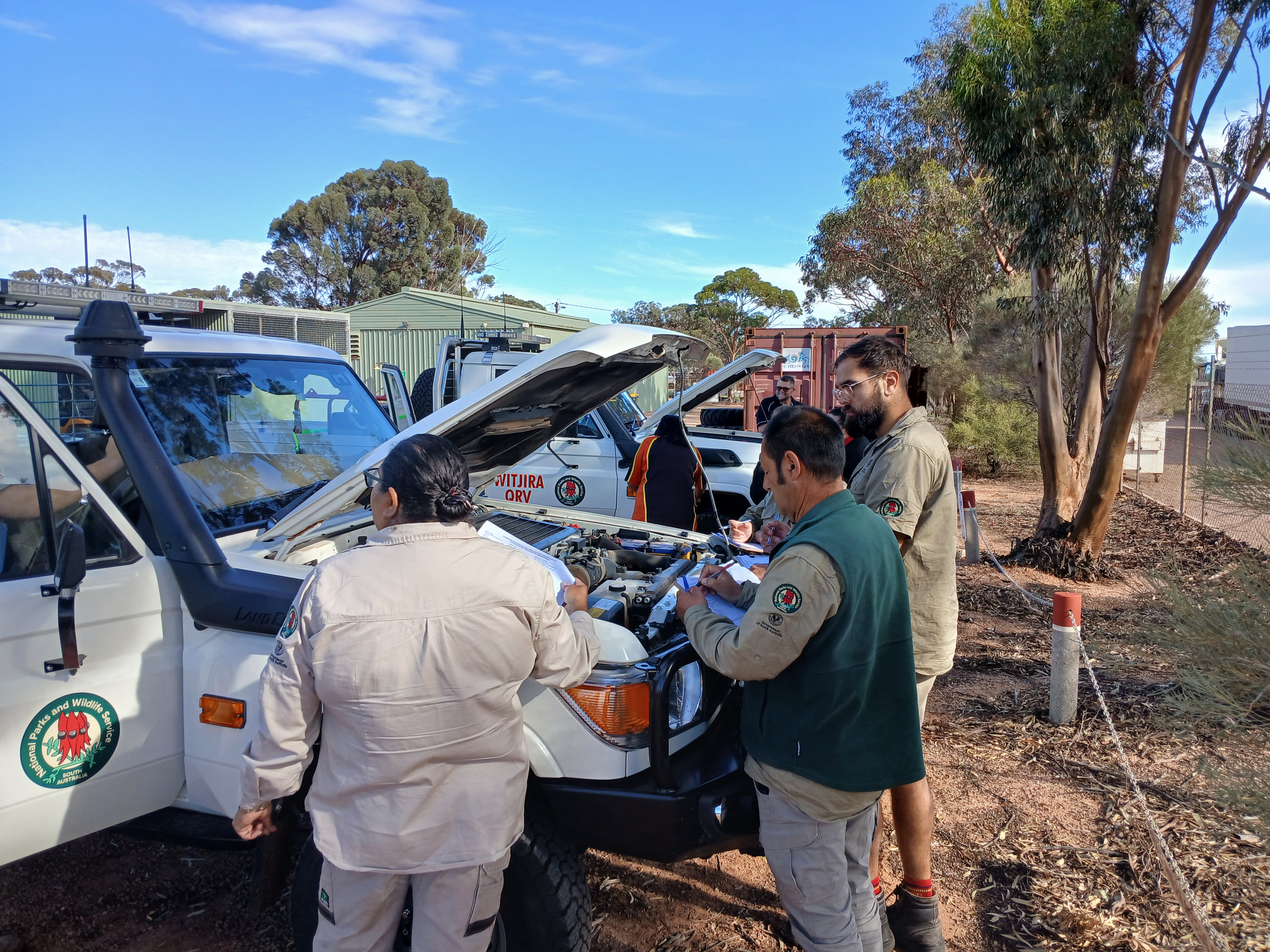
The rangers have said:
“Professionally, the program has helped me grow in many ways. I’ve built strong friendships … I’ve gained valuable knowledge from other rangers along with a better understanding of the land, plants and more.” – Raphillia
“I’ve been exposed to many different regions, conservation practices, people and equipment … I’ve implemented weekly weeding initiatives in my own parks, gone to help out of region and had other rangers help out in my region.” – Jacob
“I always go back to work after a training session feeling I can do my job better than before.” – Tim
“Listening to the experiences and perspectives of other students has helped me learn in ways that go beyond the classroom. It has built stronger connections between us and created a support network that we can continue to rely on in our workplaces and communities.” — Tanya
Benefits for rangers, nature and park visitors
Career opportunities on Country create value for South Australia’s First Nations communities and help maintain deep connections to culture.
The generational land management expertise of First Nations people contributes to better protection and restoration of landscapes and biodiversity.
For park visitors, encountering First Nations rangers is a chance to learn more about the ancient landscapes and culture, as well as other perspectives on shared history.
Learn more about Reconciliation and First Nations involvement in the parks of South Australia:
Strong People, Strong Country — Co-managing parks in South Australia (2018) PDF
5 national parks in South Australia that are rich in Aboriginal…
Article header image: ranger Matt Hartman at Dutchman’s Stern Conservation Park. Photo: Jacob Turner
Stay in the know: Sign up to get updates from DEW, straight to your inbox.